- Published on May 15, 2026
June Weekend Courses
Taught in the beautiful setting of Madingley Hall, our Weekend Courses offer you the opportunity to discover new subjects, learn from some of our finest academics, expand your professional and social networks and become part of a supportive learning community.
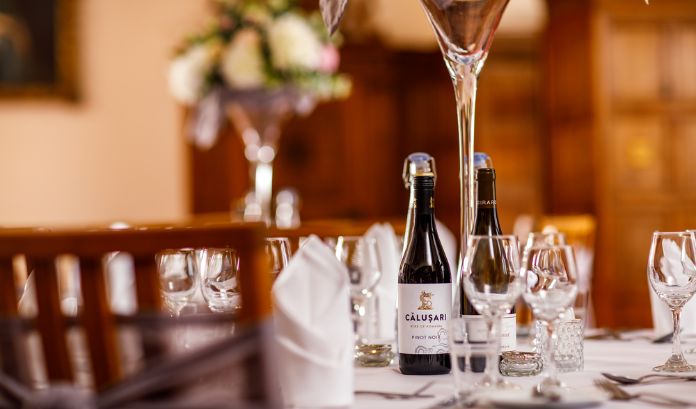
You can book to stay in the comfortable rooms at Madingley Hall, with views over the woods, gardens and courtyard. Each en-suite room has wi-fi, TV, phone, and tea- and coffee-making facilities. Breakfast is also included.
If you choose to stay nearby, no problem. You’ll still be able to enjoy the grounds during the day and enjoy the award-winning cuisine in our elegant dining hall.
The following courses will run from 12 – 14 June 2026:
Evolution and the fossil record
This course provides a wide-ranging introduction to the fascinating subject of evolution from a geological viewpoint. Aimed at beginners, as well as those with some previous knowledge, topics will include the processes of natural selection, the formation of species, aspects of fossil preservation and evidence of evolution seen in the rock record. The course will provide an overview of major events in the history of life, including evolutionary radiations and mass extinctions, recent fossil discoveries and remaining mysteries.
Tutor – Dr Peter Sheldon. Honorary Associate in Earth Sciences at the Open University; Panel Tutor for University of Cambridge Professional and Continuing Education (PACE); Associate Tutor, University of Oxford Lifelong Learning, Department for Continuing Education
Reading Classical Greek: Hesiod Theogony
Hesiod is probably Homer’s contemporary, writing c.700 BC. His Theogony (family tree of the gods) begins with Muses who inspired him whilst pasturing sheep on Mount Helicon, and takes us from the beginning of the world to the kingship of Zeus. It includes the story of Prometheus and a description of the Underworld. Hesiod’s narrative aspires to poetic authority, bringing order to a vast array of local traditions. This course will appeal to those with a confident grasp of the fundamentals of Classical Greek, who want to explore (most of) this text in the original language and develop an understanding of early Greek poetry.
Tutor – Dr John Taylor. Panel Tutor, University of Cambridge Professional and Continuing Education
Seven Renaissance giants: Van Eyck, Donatello, Leonardo, Raphael, Michelangelo, Holbein and Dürer
The European Renaissance, which blossomed in the 15th century, marks the moment when artists became celebrities for the first time, their work commissioned and collected because of who they were. In this course we will explore the lives and output of seven major figures of the period: from Italy – Donatello, Leonardo, Raphael and Michelangelo, from the Northern Renaissance – Jan van Eyck, Hans Holbein and from the German Renaissance – Albrecht Dürer. In each case we will examine key artworks and place the artists in the context of the time.
Tutor – Dr Sarah Pearson. University of Cambridge Professional and Continuing Education Teaching Associate in History of Art; Architectural Historian and Writer
Trials of a Century
This course offers an outline of modern history through a series of historic trials: the Dreyfus Affair which tore the French Third Republic apart; the Scopes ‘monkey’ trial’, which put Darwinism in the Dock in Tennessee; the Nuremberg Trial which established the authority of law over the State; the trials of Marshal Pétain and Adolf Eichmann, which revealed the operation of a nazi continent; and the trial of “Lady Chatterley’s Lover”, which tore apart what remained in Britain of Victorian morality.
Tutor – Dr Seán Lang. Honorary Visiting Fellow, Anglia Ruskin University
Our Student Stories
I work on the use of history in interaction with the metaphorical ‘other’ and more specifically the reception of historical cultures. Civic integration courses are my main area of research. The weekend course I followed closely fits in my professional aim to understand the role of history in identity processes and feeling of belonging. Understanding the past of Middle East is important here to get an understanding of the collective memory/historical culture that newcomers in Europe born in that region carry with them.
Newly arrived in the United Kingdom from Canada as a military family, it was a dream-come-true for me to discover a Cambridge University PACE Writer's Retreat at the stately Madingley Hall. With a debut novel published last year, I yearned to meet fellow writers during my time abroad and forge community. This past weekend surpassed my expectations. Friendships, laughter, mentor-led work-sopping, long walks, breaking bread together, and lasting memories are the legacy of the weekend
I attended this course to explore the study of English literature in the setting of Cambridge University. I had previously taken degrees in history and law but regretted not studying English literature at university despite enjoying it at the A level stage. It was also an opportunity to step way from my normal routines and meet new people. The combination of excellent tuition, accommodation and interaction with other students during the Fairy Tales course at Madingley Hall has encouraged me to enrol for further such courses in future.
Attending the courses at PACE gave me the chance to step out of the mundane and into possibility. The possibility to be me, away from the daily routines and pressures of life; to meet diverse groups of people with one shared aspiration: to keep learning. Being at PACE gave me access to teachers of exceptional quality and the chance to let my mind learn again: bliss! To be refreshed by the minds of fellow learners in the context of the beautiful Madingley was so very precious to me. Thank you to all, particularly the organisers who ran the perfectly oiled machine, our generous teachers and the kitchens who prepared such great suppers on Fridays and Saturdays.
I love studying especially updating my knowledge in world affairs. I opted for the AI Course as I am very inquisitive about what AI can bring to the world as I have seen a drastic change in everyday life with the intervention of AI. Applications like Chat GPT, you put certain information and you can get all the knowledge from the globe. To be honest, I love being old school, this was the reason I became more curious to understand how AI works, the history, the theories it is based on, the concepts, the future we are looking at and so many factors. I would love to take more courses at University of Cambridge and keep updating my knowledge regarding various subjects.