
- Published on November 11, 2026
February Weekend Courses
Taught in the beautiful setting of Madingley Hall, our Weekend Courses offer you the opportunity to discover new subjects, learn from some of our finest academics, expand your professional and social networks and become part of a supportive learning community.
You can book to stay in the comfortable rooms at Madingley Hall, with views over the woods, gardens and courtyard. Each en-suite room has wi-fi, TV, phone, and tea- and coffee-making facilities. Breakfast is also included.
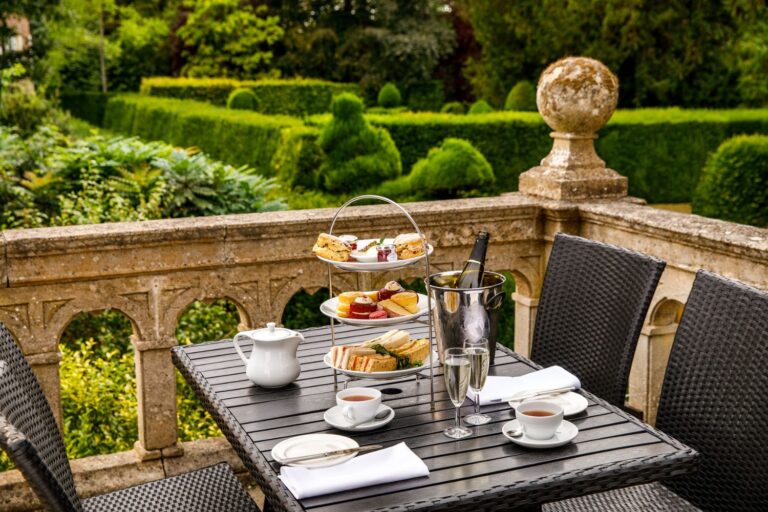
If you choose to stay nearby, no problem. You’ll still be able to enjoy the grounds during the day and enjoy the award-winning cuisine in our elegant dining hall.
The following courses will run in February 2027
Art for Gloriana: Elizabeth I and the Visual Arts
In this course we’ll explore art made during the reign of Elizabeth I, exploring how portraits, miniatures, buildings, costume and jewels were used to express political ambitions, solicit devotion, and even flirt with treason. We’ll consider how art fed into Elizabeth I’s strategies for keeping control of her court, and how her courtiers used it to evade that control. We’ll also think about the global encounters of Elizabeth’s reign, and the impacts these had on art and material culture. Finally, we’ll consider how Elizabeth I continues to inspire artists down to the present day.
Tutor – Dr Christina Faraday
Reading Virginia Woolf: Jacob’s Room and To the Lighthouse
On publishing her third novel in 1922, Virginia Woolf recognised she had found how to write fiction “in my own voice”. Five years later she produced arguably her best-loved novel, To the Lighthouse. This course will focus upon To the Lighthouse (1927) in its centenary year and will trace its links to Woolf’s discovery of her Modernist ‘voice’ in the ground-breaking Jacob’s Room (1922).
Tutor – Dr Claire Nicholson
The Archaeology of Roman Britain
Archaeological techniques and modern scientific methods allow us to re-interpret the landscape of Roman Britain, from the impact on the existing Iron Age landscape of Roman invasion, military installations, the Hadrianic frontier and the Roman army. This introduction to the archaeology of the Romano-British landscape continues with an account of the development of Roman towns, the rural economy, villas and commerce, such as pottery and metalworking. Discussion also covers religion, belief systems, and death and burial, and ends with the decline of Roman Britain. You will have the chance to handle original Roman finds and objects from recent excavations and museum collections.
Tutor – Professor Stephen Upex
Working with Generative AI: A Hands-On Introduction
This course introduces you to the practical use of generative AI, with a focus on large language models (LLMs) and real-world application. Through guided, hands-on work, you will explore prompt design, custom GPTs, and simple AI-powered workflows. The course is workshop-led and project-based, supporting sustained engagement and experimentation. You will gain practical experience applying generative AI to professional problems and ideas and may leave with a working concept or early-stage project you can continue developing after the course.
Tutor – Paul Clothier
Cities of Art and Culture in the Wider European Renaissance
The impact of the Renaissance can be observed across Europe with developments in art, architecture, literature and scientific thought. This transformative change manifested differently in each unique centre as regional traditions, trade and religious belief shaped local culture. We will examine the seven diverse centres of Hamburg, Nuremberg, Lyon, Delft, Seville, Pienza and Gubbio introducing key personalities, artists and thinkers, and revealing how renaissance culture manifested in the art, architecture and cultural life of each city.
Tutor – Dr Sarah Pearson
Marketing for Start-ups
A course for anyone interested in how a start-up can achieve success. Marketing requires an awareness of your target, customers, competitors, partners and many more. It is the driving force behind new propositions and the basics of branding, so plays a central role in influencing purchasing decisions. We focus on how you can create a marketing strategy for a new company that could propel its business into the mind of its target customer, and help to navigate the ever-evolving landscape of social media, content creation, and data analytics. A weekend of innovation, to transform your marketing approach and drive your startup to new heights!
Tutor – Andrew Hatcher
The Making of the Modern Middle East
The Modern Middle East continues to have the power to capture our attention at almost every turn, most recently with serious instability in Iran, the potential for further momentous change in Israel and the Palestinian Territories, and ongoing conflict in Libya, Sudan and Yemen. Yet why does it look as it does today, so frequently turbulent, contradictory and seemingly defiant of explanation? This course focuses on the period from the late 19th century to the present day, exploring the linked themes of religious and social identities, geography, external interventions, resources, and modern development in order to illustrate the highly complex tapestry of history, politics, cultures and peoples.
Tutor – Rupert Wallace
The Origins of England and the English: Anglo-Saxon England, c.400-1100
This course explores the origins of the English and England in the early medieval period, c.400–1100. Topics covered include identity and ethnicity, looking at the origins of the ‘Anglo-Saxons’, their relationship to the Britons, and how an ‘English’ identity came to emerge over time; the evolution of kings and kingdoms, including their roots, the ‘Heptarchy’, and the eventual creation of the ‘Kingdom of the English’; trade, towns and the origins of the medieval English landscape; the archaeological and cultural impact of the Vikings on Anglo-Saxon England; and how the Anglo-Saxons were remembered in the medieval period and after.
Tutor – Dr Caitlin Green
Our Student Stories
I work on the use of history in interaction with the metaphorical ‘other’ and more specifically the reception of historical cultures. Civic integration courses are my main area of research. The weekend course I followed closely fits in my professional aim to understand the role of history in identity processes and feeling of belonging. Understanding the past of Middle East is important here to get an understanding of the collective memory/historical culture that newcomers in Europe born in that region carry with them.
Newly arrived in the United Kingdom from Canada as a military family, it was a dream-come-true for me to discover a Cambridge University PACE Writer's Retreat at the stately Madingley Hall. With a debut novel published last year, I yearned to meet fellow writers during my time abroad and forge community. This past weekend surpassed my expectations. Friendships, laughter, mentor-led work-sopping, long walks, breaking bread together, and lasting memories are the legacy of the weekend
I attended this course to explore the study of English literature in the setting of Cambridge University. I had previously taken degrees in history and law but regretted not studying English literature at university despite enjoying it at the A level stage. It was also an opportunity to step way from my normal routines and meet new people. The combination of excellent tuition, accommodation and interaction with other students during the Fairy Tales course at Madingley Hall has encouraged me to enrol for further such courses in future.
Attending the courses at PACE gave me the chance to step out of the mundane and into possibility. The possibility to be me, away from the daily routines and pressures of life; to meet diverse groups of people with one shared aspiration: to keep learning. Being at PACE gave me access to teachers of exceptional quality and the chance to let my mind learn again: bliss! To be refreshed by the minds of fellow learners in the context of the beautiful Madingley was so very precious to me. Thank you to all, particularly the organisers who ran the perfectly oiled machine, our generous teachers and the kitchens who prepared such great suppers on Fridays and Saturdays.
I love studying especially updating my knowledge in world affairs. I opted for the AI Course as I am very inquisitive about what AI can bring to the world as I have seen a drastic change in everyday life with the intervention of AI. Applications like Chat GPT, you put certain information and you can get all the knowledge from the globe. To be honest, I love being old school, this was the reason I became more curious to understand how AI works, the history, the theories it is based on, the concepts, the future we are looking at and so many factors. I would love to take more courses at University of Cambridge and keep updating my knowledge regarding various subjects.