
- Published on November 11, 2026
May Weekend Courses
Taught in the beautiful setting of Madingley Hall, our Weekend Courses offer you the opportunity to discover new subjects, learn from some of our finest academics, expand your professional and social networks and become part of a supportive learning community.
You can book to stay in the comfortable rooms at Madingley Hall, with views over the woods, gardens and courtyard. Each en-suite room has wi-fi, TV, phone, and tea- and coffee-making facilities. Breakfast is also included.
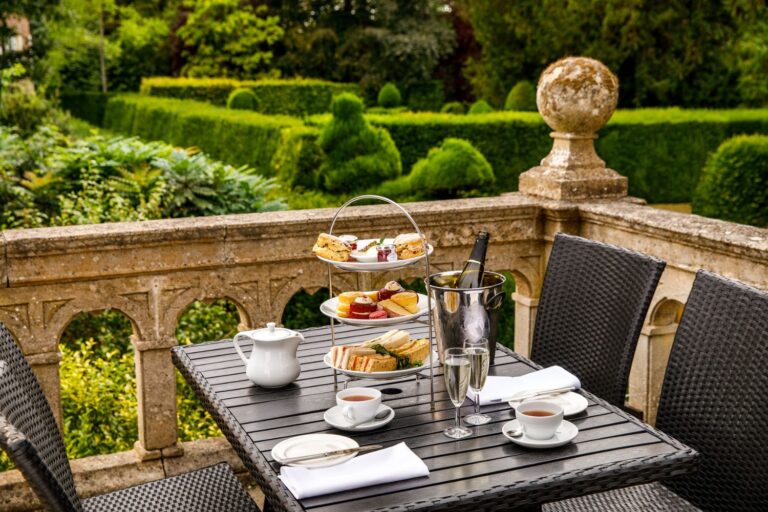
If you choose to stay nearby, no problem. You’ll still be able to enjoy the grounds during the day and enjoy the award-winning cuisine in our elegant dining hall.
The following courses will run in May 2027
Problems in European Philosophy: an Introduction
This introduction to important philosophical topics investigates key questions in European Philosophy, taking a thematic journey through its history, from Ancient Greece to Modernity. Each session focuses on a specific area of philosophy and some of its key figures: the search for truth (Plato); Rationalism and Empiricism (Descartes, Locke); ethics and moral action (Aristotle, Kant); political philosophy (Hobbes, Rousseau, Mill); and the philosophy of science (Einstein, Popper, Kuhn).
Tutor – Dr Aline Guillermet
Reading Classical Greek: Plutarch’s Themistocles
Plutarch’s biography of the brilliant maverick Themistocles, Athenian statesman and strategist in the Persian Wars, was written more than 500 years later but draws on many sources, some now lost. We will read extensive selections from this gripping narrative, considering it both as a portrait of a past age and as a product of its own. This course will enable students with a confident grasp of the fundamentals of classical Greek to explore this text in the original language and develop their understanding of Greek literature and history.
Tutor – Dr John Taylor
The Art of Innovation: Impressionism and Post-Impressionism
This course journeys into the world of modern art, to meet pioneering artists such as Renoir, Degas, Morisot, Van Gogh, and Toulouse-Lautrec. Together, we’ll explore how they reshaped artistic traditions through their vibrant paintings and expressive works on paper, and uncover the influences that sparked their bold innovations. Over the weekend, you will encounter both celebrated masterpieces and intriguing less well-known works in oil, watercolour, pastel and drawing. Each session invites lively conversation, close looking and thoughtful reflection in a supportive learning environment.
Tutor – Jo Rhymer
The Black Death
Between 1346 and 1352 the Black Death killed half the population of Europe and the Near East, and returned repeatedly over the next three centuries. Its arrival and persistence coincides with the decisive steps taken towards modernity by the economies and societies of northwest Europe. We explore the origins of the worst pandemic in recorded history, its repeated outbreaks, its eventual disappearance, and its impact on western Europe in general and England in particular.
Tutor – Professor Mark Bailey
Literature and Nature: Landscapes of Love and Loss
This course takes a walk through dynamic, comforting and explorative work about the natural world, from Romanticism to the present day. We will spend some time bird-watching with poet John Clare and wander with Wordsworth, climb with Nan Shepherd’s The Living Mountain, a mighty meditation on time, space and human-natural entanglements, and consider our planet as seen from space in Samantha Harvey’s Orbital.
Tutor – Dr Jenny Bavidge
Sleep and the Brain: from Neuroscience to Behaviour
This course explores the neuroscience of sleep and its critical role in learning, memory, and mental health across the lifespan. Beginning with sleep architecture and brain mechanisms, we’ll examine how sleep consolidates memories, clears metabolic waste, and may protect against neurodegenerative diseases like Alzheimer’s. We’ll investigate the consequences of sleep deprivation, the bidirectional relationship between sleep and mental health, and conclude with evidence-based strategies for optimising sleep in modern life. Translating complex neuroscience into practical insights, the course demonstrates why prioritising sleep is essential for learning, cognitive performance, emotional well-being, and long-term physical and mental health.
Tutor – Camice Jeanette Revier
The Operas of Hector Berlioz: Cellini, Goethe, Virgil and Shakespeare
Hector Berlioz wrote four operas that have enjoyed fresh popularity in modern times. Each one reflects one of the composer’s deep literary loves: for the Renaissance goldsmith Benvenuto Cellini, Goethe’s great poem Faust, Virgil’s Roman epic of the fall of Troy (Les Troyens), and Shakespeare comedies (Béatrice et Bénédict).
Tutor – Dr Robert Letellier
The Vikings in Britain and Ireland
The Vikings are notorious for their raids on coastal monasteries, but they made a lasting impact on the different kingdoms and peoples that came to make up modern Britain and Ireland. This course, which draws on archaeology, history, place-names and genetics, traces the Vikings’ interaction with these islands from the early raids through conquest and settlement to the long-term integration of the Vikings with native peoples, and the establishment of both major towns and rural communities, as well as distinctive regional cultures. The course also explores the lasting legacy of the Vikings in language, customs and DNA.
Tutor – Dr Gareth Edmund Williams
Our Student Stories
I work on the use of history in interaction with the metaphorical ‘other’ and more specifically the reception of historical cultures. Civic integration courses are my main area of research. The weekend course I followed closely fits in my professional aim to understand the role of history in identity processes and feeling of belonging. Understanding the past of Middle East is important here to get an understanding of the collective memory/historical culture that newcomers in Europe born in that region carry with them.
Newly arrived in the United Kingdom from Canada as a military family, it was a dream-come-true for me to discover a Cambridge University PACE Writer's Retreat at the stately Madingley Hall. With a debut novel published last year, I yearned to meet fellow writers during my time abroad and forge community. This past weekend surpassed my expectations. Friendships, laughter, mentor-led work-sopping, long walks, breaking bread together, and lasting memories are the legacy of the weekend
I attended this course to explore the study of English literature in the setting of Cambridge University. I had previously taken degrees in history and law but regretted not studying English literature at university despite enjoying it at the A level stage. It was also an opportunity to step way from my normal routines and meet new people. The combination of excellent tuition, accommodation and interaction with other students during the Fairy Tales course at Madingley Hall has encouraged me to enrol for further such courses in future.
Attending the courses at PACE gave me the chance to step out of the mundane and into possibility. The possibility to be me, away from the daily routines and pressures of life; to meet diverse groups of people with one shared aspiration: to keep learning. Being at PACE gave me access to teachers of exceptional quality and the chance to let my mind learn again: bliss! To be refreshed by the minds of fellow learners in the context of the beautiful Madingley was so very precious to me. Thank you to all, particularly the organisers who ran the perfectly oiled machine, our generous teachers and the kitchens who prepared such great suppers on Fridays and Saturdays.
I love studying especially updating my knowledge in world affairs. I opted for the AI Course as I am very inquisitive about what AI can bring to the world as I have seen a drastic change in everyday life with the intervention of AI. Applications like Chat GPT, you put certain information and you can get all the knowledge from the globe. To be honest, I love being old school, this was the reason I became more curious to understand how AI works, the history, the theories it is based on, the concepts, the future we are looking at and so many factors. I would love to take more courses at University of Cambridge and keep updating my knowledge regarding various subjects.